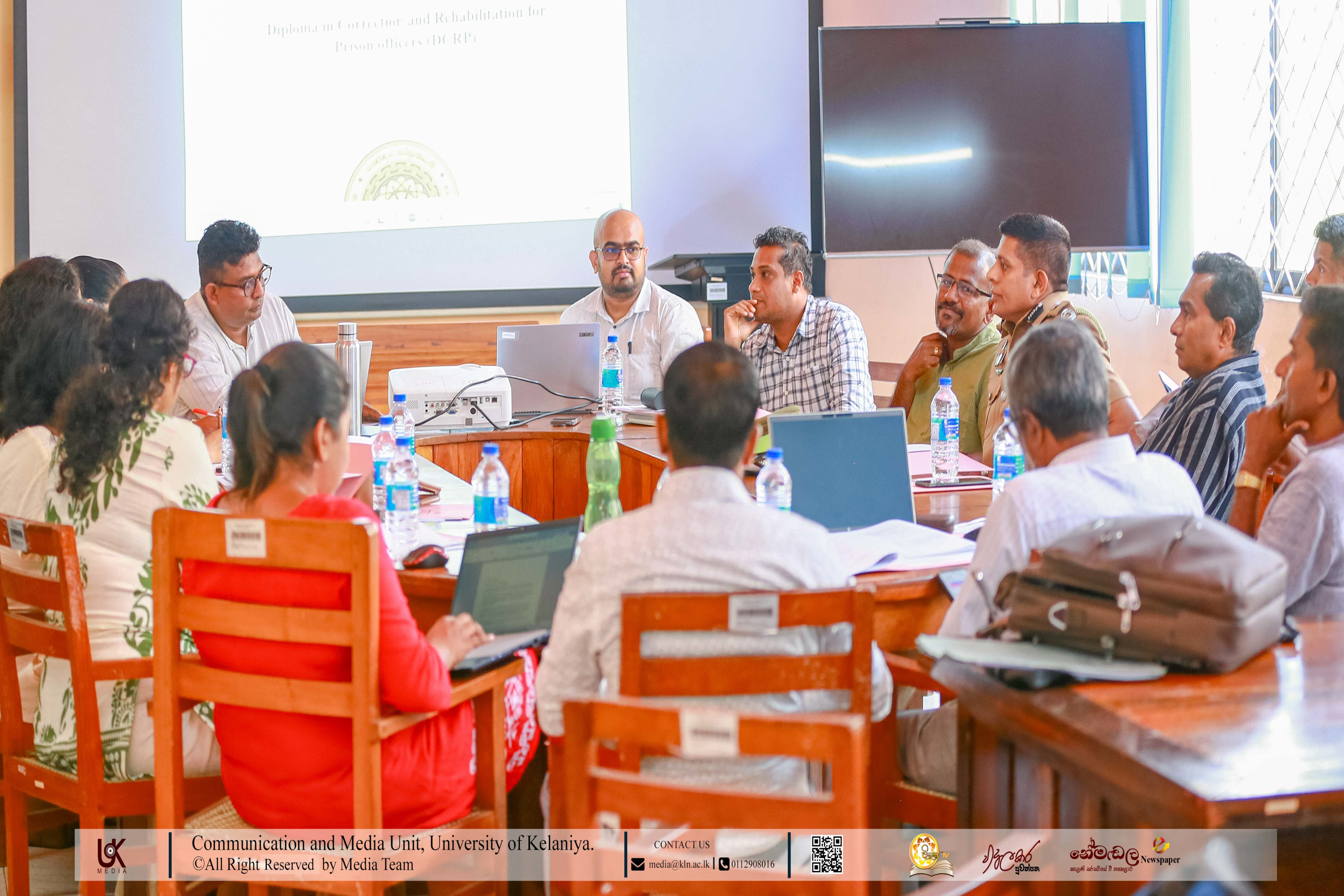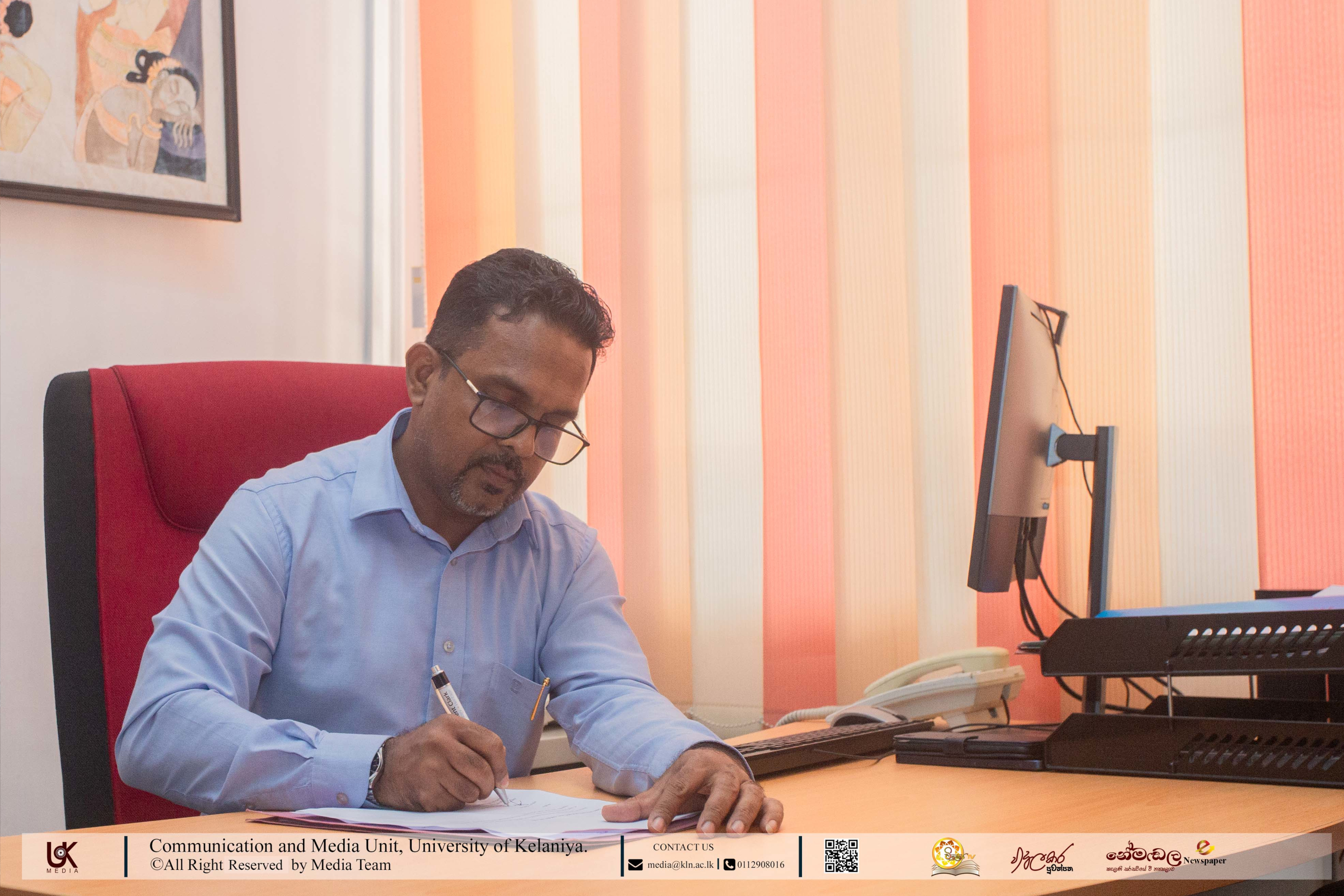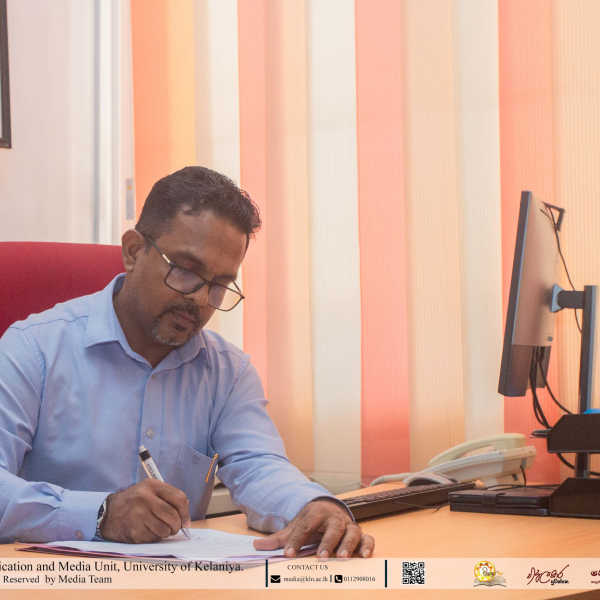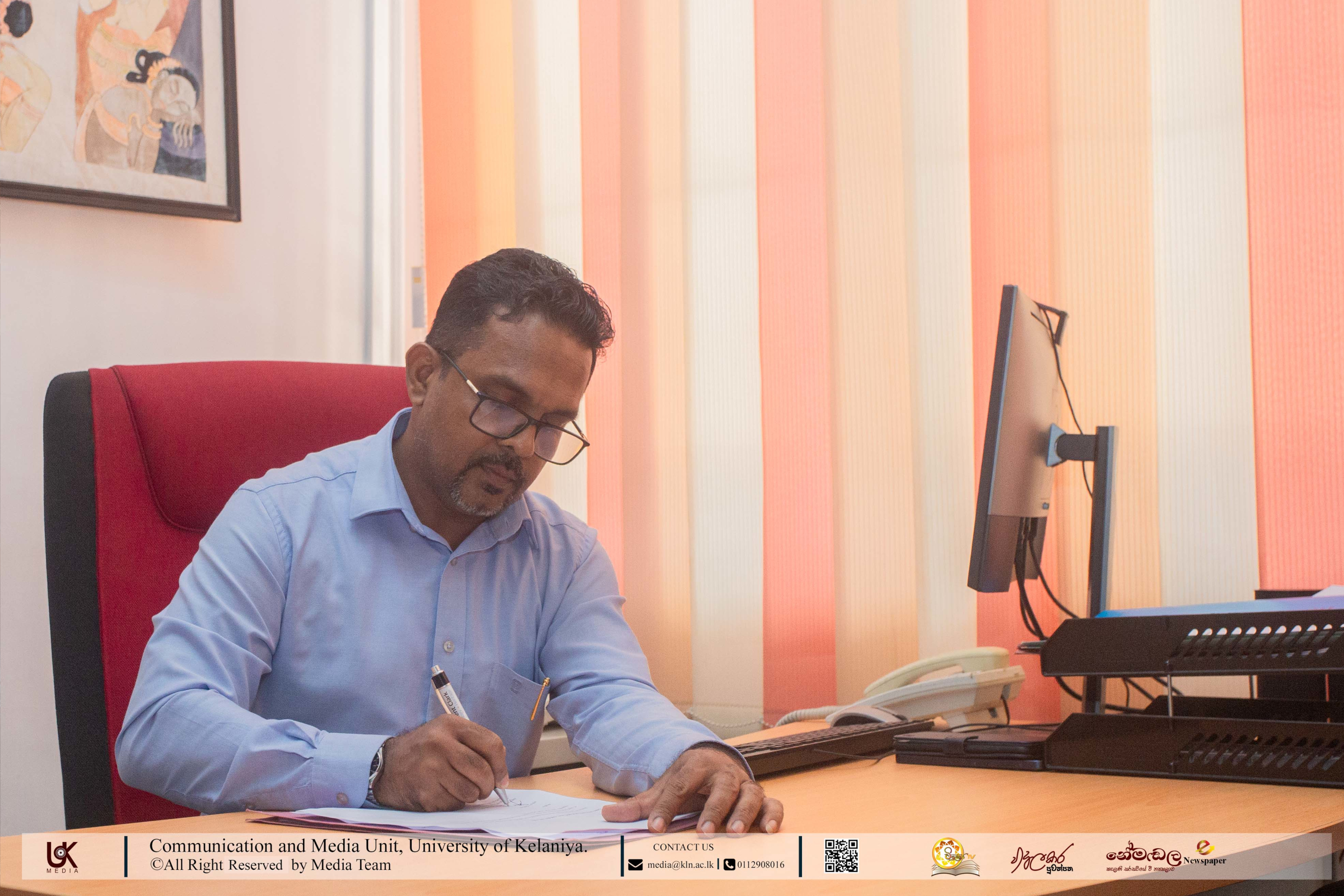
Professor Chandima Bogahawatta officially assumed duties as the Head of the Department of Archaeology, University of Kelaniya, on 7th May 2026 at the Department of Archaeology premises.
Prof. Bogahawatta is a distinguished archaeologist, heritage management professional, and scholar with more than two decades of experience in academia, archaeological research, cultural heritage management, and university administration. He currently serves as a Professor in the Department of Archaeology at the University of Kelaniya and previously served as the Additional Director General of the Central Cultural Fund of Sri Lanka.
He obtained his PhD in Archaeology and Museology from Shandong University in 2011. His doctoral research critically examined the ancient economic relationships between China and Sri Lanka based on Sri Lankan archaeological artefacts, reflecting his long-standing scholarly interest in Sino–Sri Lankan historical and maritime connections. He also holds an M.Sc. in Archaeology and a Postgraduate Diploma in Archaeology from the Postgraduate Institute of Archaeology of the University of Kelaniya, as well as a B.A. (Hons) in Archaeology from the University of Sri Jayewardenepura.
Prof. Bogahawatta’s research expertise spans several important fields, including Epigraphy, Numismatics, Silk Route studies, Brahmi inscriptions, Digital Paleography, Cultural Heritage Tourism, and Archaeological Impact Assessments. His academic work has significantly contributed to understanding Sri Lanka’s cultural and economic links with the wider Asian region.
Throughout his academic career, he has held several senior appointments, including Professor and Senior Lecturer at the University of Kelaniya, Senior Lecturer at Buddhasravaka Bhiksu University, and Acting Head of the Department of Archaeology at the University of Kelaniya in 2019. He also served as Head of the Department of Social Science and Comparative Studies at Buddhasravaka Bhiksu University from 2011 to 2014. In addition, he has contributed to university administration as Faculty Research Manager of the Faculty of Social Sciences, Coordinator of the Research Centre for Social Sciences, and as a member of several academic boards and university governing bodies.
In the field of national heritage management, Prof. Bogahawatta played a major role through the Central Cultural Fund, where he supervised and contributed to numerous conservation and archaeological projects of national importance. He served as Project Director for Archaeological Impact Assessments for major development initiatives, including the Kalugal Oya Reservoir Development Project and the Gin Nilwala Diversion Project, and contributed to the Kumbukkan Oya and Upper Elahera reservoir projects.
An accomplished researcher and author, Prof. Bogahawatta has published scholarly articles and books on archaeology, cultural heritage, and historical studies. His publications include studies on ancient Chinese coins in Sri Lanka, iconographic traditions of Ganesha figures, and archaeological perspectives on cultural practices and artistic traditions. He has also contributed chapters to internationally published volumes on maritime cultural heritage and archaeology.
Prof. Bogahawatta maintains an active international academic profile through his affiliations with several professional organizations. He is a Fellow of the Sri Lanka Council of Archaeologists and a member of the European Association of Archaeologists, International Council on Monuments and Sites (ICOMOS), the International Confucius Association, and the Royal Asiatic Society of Sri Lanka.
Beyond research and administration, he has also provided leadership to international academic conferences as a session chair, organizing committee member, and Chief Editor of the Proceedings of the 4th International Conference on Social Sciences (ICSS 2018) held at the University of Kelaniya.
Fluent in Sinhala and English, and proficient in Chinese, Prof. Bogahawatta continues to actively contribute to archaeological scholarship, international collaboration, heritage conservation, and cultural tourism in Sri Lanka.
The event was attended by Professor Chaminda Abesinghe, Dean of the Faculty of Social Sciences.