Star InactiveStar InactiveStar InactiveStar InactiveStar Inactive

Course code

MACO 41414

Course Title

New Media and Information Technology

Pre – requisite   - None

Types/Status      - Core

Learning outcomes:

At the end of the unit student should be able to:

Apply various theories connected with the study of communication and its application to the study of the same. The student will also get the chance to spell out the concepts connected with the theories and the practice of the same

Course Content

Overview of New Media

Characteristics of New Media

Comparison of New Media and Traditional Media

Introduction to Web technologies

Social Networking

Role of New Media in Information, Education, Entertainment and Persuasion.

Knowledge Management

Graphics and applications of New Media,

Web casting, New Media and Marketing

Politics and New Media

Ethics of New Media

Impact of New Media

New Media in Sri Lankan Context

Method of teaching and learning

Lectures, Tutorials, Workshops, Field Visit

Assessment

Project          [60%]

Assignment  [20%]

Presentation [20%]

Recommended Reading

Razdan Ashnin ,(2008) New Media Techniques and Trends , New Delhi , Vistaar Publishing

Wilson Burbara (2000)Information Technology : The Basic , India , Thomson Learning .


Course code

MACO 41423

Course Title

Internship / Institutional Training

Pre – requisite   - None

Types/Status      - Core

Learning outcomes:

At the end of the unit student should be able to:

Apply various theories and practices connected with the study of Mass communication. The student will also get the chance to engage in a period of  internship  in a media unit gaining experience in a particular area of the subject

Course Content

Selection of a particular media unit

Engage methodically as an intern

Awareness on the selected area of study

Observation and participation

Learning  through action

Practicing the media environment

Submission of a report  based on the  internship practice

Method of teaching and learning

Instruction, Supervision, Discussion, Group work, Demonstrations

Assessment

Interview                     [60%]

Self Evaluation Report[40%]


Course code

MACO 41432

Course Title

Gender studies and Media

Pre – requisite  - None

Types/Status     - Core

Learning outcomes:

At the end of the unit student should be able to:

Apply various theories connected with Gender studies, and the application to the study of Mass Communication. The student will also get the chance to analyze the concepts connected with the theories and the practice of the subject area.

Course Content

What is gender? Gender role and approaches, masculinity / feminist, Gender stereotypes, Gender race and class, gender analysis and theories, women leaders in developing countries, Gender crime and justice/ human rights, Gender and Sex Roles, Psychology of Women, Sri Lankan stance and the portrayal of women.

Method of teaching and learning

Lectures, Tutorials, Workshops, Staff student seminar 

Assessment

Examination [60%]

Assignment  [20%]

Presentation [20%]

Recommended Reading

 Zoonen ,Liesbet Van ,(2000)Feminist media Studies , Sage , UK

 Dines Gail ,Humez, Jean M ,(eds) (2003)Gender ,Race and Class in Media:

A texf-reader, Sage , USA


Course code

MACO 41443

Course Title

Translation Methods

Pre – requisite   - None

Types/Status      - Core

Learning outcomes:

At the end of the unit student should be able to:

Synthesize various theories connected with the study of communication and its application to the study of the Translation process. The student will also get the chance to spell out the concepts connected with the theories and the practice of the Translation Methods.

Course Content

Need for translation

translation, transference ,transformation, adaptation, transliteration

Introducing translations, Documentation, translation techniques,

Cultural Translation, Sentences and the understanding on the context. Types of translation, classified in to science technology, prose, verse, drama, narrative, general features, reports ..etc. translation exercises from one language to another. Evaluating original works and the translated works.

Method of teaching and learning

Lectures, Tutorials, Workshops, Demonstrations

Assessment

Examination [60%]

Assignment   [20%]

Presentation  [20%]

Recommended Reading

Newmark, Peter, (1998) More Paragraphs on Translation, Multilingual Matters Ltd, Clenedon

Venuty, Lawrence, (1998) The Seandals of Translations; Towards an Ethics of Difference sage, London

Robinson, Douglas, (1997) Becoming a Translator. London Rout ledge

Fernandes, Millor, (2001) Literary Translation


Course code

MACO 41453

Course Title

Staff - Student Seminar

Pre – requisite  - None

Types/Status     - Core

Learning outcomes:

At the end of the unit student should be able to:

Evaluate various theories connected with the study of Communication and its application to the study of the same. The student will also get the chance to synthesize the contemporary concepts and issues connected with Mass Communication

Course content

Selection of topic, Organization of a group ,Meeting point for teacher  and student, Making use of technology, preparation, paper reading, presentation,  Discourse ,Rediscovery ,Observation, Conclusion ,Assessment, Need for publication,(Listening, Presentation, Performance, Arrangement)

Method of teaching and learning

Lectures, Tutorials, Workshops, Demonstrations,  Practical

Assessment

Full  Text     [60%]

Presentation [40%]


Course code

MACO 41463

Course Title

Marketing and Communication

Pre – requisite - None

Types/Status    - Optional

Learning outcomes:

At the end of the unit student should be able to:

Apply various theories connected with the study of Marketing and communication. The student will also get the chance to evaluate the concepts connected with the theories and the practice of the same

Course Content

What is Marketing? Role of Marketing in Communication?

Marketing and Consumer

Marketing strategies and Marketing mix,

Segmentation and  Marketing,

Products, services  and Branding Strategies

Marketing Communication

Marketing and Social Responsibility

Personal selling and Direct Marketing 

Marketing and Information Communication Technology

Marketing and research

Method of teaching and learning

Lectures, Tutorials, Field Visit, Surveys, Demonstrations

Assessment

Examination [60%]

Assignment   [20%]

Presentation  [20%]

Recommended reading

Cottle Philp, amstrong Gary, (11th ed) (2006) Principals of Marketing, Perntice Hall of India

McMaster, Mark, (2001) A Life Time of Sales, Sales & Marketing Management

Porter, Michael, E. (1985) Competitive Advantage: Creating & Sustaining Superior Performance, New York, Free Press

Lane Keller Kevin, (2nd ed) (2003) Strategic Brand Management, Upper Saddle River, Prentice Hall

Cottlr Philp, (11th ed) (20036)  Marketing Management, Upper Saddle River, Prentice Hall.


Course code

MACO 41472

Course Title

International Organizations

Pre – requisite - None

Types/Status    - Core

Learning outcomes:

At the end of the unit student should be able to:

Know various titles and functions connected with the world organizations related for the study of Mass communication.

Course content

Role of world organizations, The place of world organizations linked with mass media.

A special study on the following areas is recommended. They are units classified into following areas;

cultural

political

economical

social

education

the special study on the following organizations;

UN and affiliated bodies such as UNESCO, UNICEF,WHO…etc., Asian Development Bank(ADB),International Monitory Fund(IMF),IFRCS, Media related international Non governmental organizations such as Article 19,Amnesty International, Freedom House, ABU ,AMIC,

Method of teaching and learning

Lectures, Tutorials, Field Visits, Workshops, Surveys, Demonstrations 

Assessment

Examination [60%]

Assignment   [20%]

Presentation  [20%]

Recommended Reading

Alleyne, Mark D, (1995) International Power & International Communication, Macmillam, Hong Kong


Course code

MACO 41482

Course Title

Print Media Studies-II

Pre – requisite  -Candidate should fulfill- Print Media Studies- 1

Types/Status     - Optional

Learning outcomes:

At the end of the unit student should be able to:

Demonstrate the knowledge in Print media Studies in practicing of its same.

Course content

News reporting, feature writing, column Writing, Editorial Writing, Interviewing Photo Journalism, Investigative Journalism  illustration, cartoons, Graphics Designing , special event reporting(Parliament, Court, Election, Business, Science, War, Sports, Children…etc.) ,subbing, proof reading,

Method of teaching and learning

Lectures, Tutorials, Workshops, Field Visit

Assessment

Examination [40%]

Assignment  [20%]

Production    [40%]

Recommended Reading

Harcup ,Tony ,(2004) Journalism Principles and Practice , Vistaar , India

McBride, S, (1980) Many Voices, One World (Report by the International Commission for the Study of Communication Problems) Paris UNESCO, London, Kogun, Paul

Mcluhan Marshall(1975)Understanding Media ,The Extention of man, Routledge and Kegan Paul ,London

Meadow ,C.T (1970)Man-Machine Communicator ,New York ,Wiley –Interscience.

Clark Wesley(1958) Journalism Tomorrow, Syracase Univ. press


Course code

MACO 41492

Course Title

Film Studies -II

Pre – requisite  - Candidate should fulfill- Film Media Studies - 1

Types/Status     - Optional

Learning outcomes:

At the end of the unit student should be able to:

Demonstrate the Knowledge in Film Studies in Practicing of the same.

Course Content

Study of Film Production, Film Editing, Understanding Drama, Novel, Painting and Photography, Acting for Cinema, Camera Techniques and Cinema, Sound Techniques and Cinema, Lighting and Cinema, Film Industry and popular Cinema, Digital Techniques and Future of Cinema, Installation to Video Art,

Method of teaching and learning

Lectures, Tutorials, Workshops, Staff student seminar

Assessment

Examination [40%]

Assignment  [20%]

Production    [40%]

Recommended reading

Case, Dominic, (2nd ed) (2001) Film Technology in Post Production, Boston, Focal Press

Hollyn, Norman, (1984) A Film Editing Hand Book, New York, Arco Press

Aikin, E. G. M. (1987) Sound Recording & Pre- Production, Boston, focal Press

The complete film Production Hand book (3rd ed) (2001) Boston, Focal Press

The Techniques of documentary film Production, (4th ed) (1981) Boston, focal Press

Reflections: twenty- one Cinematographer at Work, (2002) Hollywood ASC Press


Course code

MACO 42414

Course Title

Media Criticism

Pre – requisite  - None

Types/Status     - Core

Learning outcomes:

At the end of the unit student should be able to:

Analyze various theories connected with the study of communication and its application to the study of the Mass Communication. The student will also get the chance to synthesize the concepts connected with the theories and the practice of the Subject

Course content

What is Media Criticism? Origin and evolution of criticism in the holistic perspective

Role of the media critic

Explore the  media Content

Evaluation  Process, Assessment Process

Interpretation, appreciation, analyzing,

Media structures,

Aesthetic judgment, evaluations

Relation between Media Criticism and concepts of Literary Criticism( Local and world),Criticism and critical practices in the 20th century

Method of teaching and learning

Lectures, Tutorials, Workshops, Staff student seminar

Assessment

Examination [60%]

Assignment  [20%]

Presentation [20%]

Recommended reading

Cohen, Fodi R, (1998) Communication Criticism. London, Sage

O’ Donnell, Victoria, (2007) Television Criticism. London, Sage

Waugh, Patricia, (2006) literary theory and Criticism. New Delhi, Oxford

Zitner, Sheidon P. (1966) The Practice of Criticism. Illinois Glenview wood, Neighed

Lodge, David, (1998)Modern Criticism and Theory, India, Pearson


Course code

MACO 42423

Course Title

Communication and Literary Insights

Pre – requisite  - None

Types/Status     - Optional

Learning outcomes:

At the end of the unit student should be able to:

Apply various theories connected with the study of communication and its application to the study of Mass Communication. The student will also get the chance to evaluate the concepts connected with the theories and the practice of the Subject.

Course content

What are Literary Insights?

The application of Literary Insights to the Study of Communication. They include

Literary theories; movements and schools of thought such as Structuralism, poetics, Psychoanalysis, Deconstructionalism, Feminism, Post colonialism, Racism, Nationalism and Ethnocentricism, Postmodernism.

Interpretational meanings, Rhetoric, Semiotics.

Study of a selected indigenous and world classics

Method of teaching and learning

Lectures, Tutorials, Workshops, Discussions

Assessment

Examination [60%]

Assignment   [20%]

Presentation  [20%]

Recommended reading

Congstock, G, (1988) Public Communication & Behavior, New York, Academic

Eco, U, (1977) A Theory & Semiotics, London, Macmillan

Ellis, J, (1982) Visible Fictions, London Rout ledge & kegan Paul

Gramsci, A, (1971) Selection from the prison Note books, London ,Lawrence and Wishar


Course code

MACO 42432

Course Title

Media and Religious Communication

Pre – requisite  - None

Types/Status     - Optional

Learning outcomes:

At the end of the unit student should be able to:

Evaluate various teachings connected with the study of communication. The student will also get the chance to compare  the teachings laid down in  one  religion  with  another

Course content

What are the underline factors connected with religious communication studies?

How were the religious communication linked with communal thinking

Study of religious teachings and the use of Mass media

folk beliefs and ritual communication

Selections from such religions as Buddhism, Christianity, Hinduism and Islam 

Study of creative works connected with religious teachings and the presentation through mass media

Informational trends on religious issues.

Study of oriental innovations on religious matters with special reference to Asian Philosophies.

Method of teaching and learning

Lectures, Tutorials, Workshops, Demonstrations

Assessment

Examination [60%]

Assignment   [20%]

Presentation  [20%]

Recommended reading

Trenaman, J. S. M. (1967) Communication and Comprehension. London: Longman

Turner .G, (2004) Understanding Celebrity. London: Sage

Webster, F. (1995) Images of the Information Society, London: Rutledge

Williams, R. (1961) Culture and society, Hamondsworth, Penguin


Course code

MACO 42442

Course Title

Radio studies -II

Pre – requisite  -Candidate should fulfill- Radio studies - 1

Types/Status     - Optional

Learning outcomes:

At the end of the unit student should be able to:

Demonstrate the Knowledge in Practicing Radio media studies of its same.

Course content

News gathering processing and reading, microphone techniques, presentation techniques, interview methods, types of reporting, recording and editing by using software. Script  writing, Sound balancing, continuity studio and DJ studio, OB Productions and updating, web casting,

Method of teaching and learning

Lectures, Tutorials, Workshops, Demonstrations

Assessment

Examination [40%]

Assignment   [20%]

Production    [40%]

Recommended Reading

Banerjee ,Indrajit , Senawirathne ,Kalinga (eds) (2006) , Public Service Broadcasting in the Age of Globalization , AMIC , Singapore

Weldon,T.A. and Ellingsworth H.W.(1970) Effective Speech Communication.Glenview ,Scott ,Foresma

Innis,H(1951).The bias and Communication ,Toranto Univ.press ,Toranto.

Denis McQuail (ed)(1972)Sociology of Mass Communication ,London,Penguin.

Mahendra,S (1980)Memory and Message, Colombo


Course code

MACO 42452

Course Title

Television Studies -II

Pre – requisite  - Candidate should fulfill- Television Media - 1

Types/Status     - Optional

Learning outcomes:

At the end of the unit student should be able to:

Apply the Knowledge in Television media studies.

Course content

Writing for television, types of productions ,  performing Arts and  television , News gathering , reporting and presenting, camera techniques, presentation techniques, interview methods, Television productions, , recording and Editing, lighting,

live programmes, web casting,

Method of teaching and learning

Lectures, Tutorials, Workshops, Demonstrations

Assessment

Examination [40%]

Assignment  [20%]

Production    [40%]

Recommended Reading

Marriott, Stephanie, (2007) Live Television: Time, Space & the Broadcast event, Sage, UK

Hettiarachchi, Stanly, (2001) In Search of Editing Techniques, Wijesooriya Publications, Mulleriyawa  

Denis McQuail (ed) (1972)  Sociology of Mass Communication ,London ,Penguin.

Halloran J.D.(ed)(1970)The effect and Television ,Pather .


Course code

MACO 42466

Course Title

Dissertation

Pre – requisite  - None

Types/Status     - Core

Learning outcomes:

At the end of the unit student should be able to:

Analyze various theories connected with the study of communication and its application to the study of Mass Communication. The student will also get the chance to apply the concepts connected with the theories and the practice of the subject

Course content

The candidates should consent to compile and present a research dissertation containing approximately 10,000 words on a selected topic in mass communication in consultation with supervisor nominated by the Department of Mass Communication.

Method of teaching and learning

Instruction, Supervision, Discussion

Assessment

Dissertation                     [80%]

Presentation and Defense [20%]
Star InactiveStar InactiveStar InactiveStar InactiveStar Inactive

Course code

MACO 31414

Course Title

Development Communication

Pre – requisite     - None

Types/Status        - Core

Learning outcomes:

At the end of the unit student should be able to:

Apply various theories connected with the study of development communication and its application to the study of Mass communication. The student will have the chance to evaluate the nature, growth and trends in the field of development communication.

Course Content

What is development? Perspectives of development, concept of development and Development Communication, sustainable development, Colonization and development, Behavior Change Communication(BCC), development projects(local/international), mass media and national development, development and community, development and traditional media, modern trends and concepts of development communication, Rural Development, Urbanization, Industrialization, Westernization, Modernization, Globalization

Method of teaching and learning

Lectures, Tutorials, Workshops , Field Visits , Demonstrations , Surveys

 Assessment

Examination [60%]

Assignments [20%]

Field Survey [20%]

Recommended Reading

Jayaweera, Neville, Amunugama, sarath (ed)(1987),Rethinking Development Communication, AMIC, Singapore .

Schramm ,W (1964)Mass Media and National Development, Stanford University press.

Lerner ,Daniel and Wilber Schramm ,(1967) Communication and change in the developing Countries ,Honolulu ,East West learner press.

Lerner ,D (1958) The Passing of Traditional society , N.Y. Free press.


Course code

MACO 31424

Course Title

Cross-Cultural Communication

Pre – requisite  - None

Types/Status    -  Core

Learning outcomes:

At the end of the unit student should be able to:

Compare various theories connected with the study of cross cultural communication and its application to the study of mass communication. The student will have the chance of addressing various aspects of the discipline.

Course Content

What is Cross-Cultural communication? communication expansion and intercultural concepts, cultural identity, cultural  diversity  , Pluralism , comparison and  study of  cultural artifacts, impact of culture on media, and different cultures  popular culture, concept and ideologies .Studies of the impact of trends of religion, history, politics, and literature on cross cultural studies on selected  scholars and their works on the subject.

Method of teaching and learning

Lectures, Tutorials, Workshops , Staff student seminars

Assessment

Examination [60%]

Assignment  [20%]

Presentation [20%]

Recommended Reading

Holliday , Adrian , Hyde , Martin , Kullman , John (2005) Inter-Cultural Communication ,Rout Ledge Chennai .

Laungani , Pittu D . (2007) Understanding Cross-Cultural Psychology ,Sage , India

Mathur Kanwar ,B(2001)Intercultural Communication , Agenda for Development Countries . Allied Publishers Ltd. India .

Williams Raymond (1961) Culture and Society,Hammondsworth ,Penguin.

Althusser ,L (1971 ,Lenin and Philosophy ,London ,New Left book.


Course code

MACO 31433

Course Title

Creative Communication

Pre – requisite    - None

Types/Status       - Core

Learning outcomes:

At the end of the unit student should be able to:

Apply various theories connected with the study of creative communication and its application to the study of Mass communication. The student will have the chance of illustrating various aspect of creative communication.

Course content

What is creative communication? creative communication in human society, Aesthetic aspects of creativity, creative art,  folk art, media and its creative features, creative  structure in audio, video and written communication, traditional media and creative  communication, scientific study of mass consciousness and creativity, classical literature and creative communication, modern journalism and creativity.

Method of teaching and learning

Lectures, Tutorials, Workshops ,  Field Visits , Staff student seminars

Assessment

Examination [60%]

Assignments [20%]

Presentation  [20%]

Recommended Reading

Altheide ,D.L.(1974) Creating Reality Beverly Hills , Sage

Bandara A , (1986) Social Foundations of Thought and Action:

A Social cognitive Theory , Englewood Cliffs , Prentice Hills

Barthes R,(1977) Image Magic , Text Essays London ,Fontana

Berger A.A.(1992)Popular Genres , New Burg Park, Sage

Mahendra ,S (1998)Terms in Culture and Communication ,Colombo ,Gunasena.

Eliot T.S.(1948)Notes towards a Definition of Culture , Fober and Fober ,London .


Course code

MACO 31443

Course Title

Media Ethics

Pre – requisite   - None

Types/Status     - Core

Learning outcomes:

At the end of the unit student should be able to:

Apply various theories connected with the study of media ethics and its application to the study of Mass communication. The student who studies these aspects of ethics will have the chance to formulate, innovate and present media messages.

Course Content

What is meant by ethics? Philosophical background in Ethics, social ethics, media ethics, the difference between the natural law and artificial  law(man made),taboo, censorship(media and social) ,family, moral ethics, evolution  of ethics, human values and other values, media ethics, professional ethics ,advertising ethics, ethics based on political and economic reporting.

Method of teaching and learning

Lectures, Tutorials, Discussions , Staff Student Seminar

 Assessment

Examination [60%]

Assignment   [20%]

Presentation  [20%]

Recommended reading

Matelski, Marilyn J,(1991) TV News Ethica, Facal Press, London

Limburg, Val E .(1994) Electronic Media Ethics, Facal Press, London

Kunczik, Michael .(ed) (1999) Ethics in Journalism, FES

Gunawardhene ,Nalaka, (ed) (1997) Communication Ethics, A South Asian Perspective, AMIC, Singapore

Lyer, Venket, (ed) (2002) Media Ethics in Asia, AMIC, Singapore

Frankena, William K, (1973)  Ethics Prentice- Hall of India, New Delhi

Ingulli, Halbert, (2002) Syber Ethics, Thomson, USA


Course code

MACO 31453

Course Title

Media Law

Pre – requisite   - None

Types/Status      - Core

Learning outcomes:

At the end of the unit student should be able to:

Apply various theories connected with the study of media law and its application to the study of Mass Communication. The student will be a in position to obtain an overview of aspects pertaining to the relations between mass media and legal issues.

Course content

Definitions, Development of ethics leading to  law, meaning and purpose of law, media  regulation, public interest and constitutional  provision, freedom of expression, state constitution, penal code, acts and regulations (print, electronic and new media),public performance act, media laws pertaining to agreements  and declaration , right to information, study of human rights, defamation, intellectual property rights, pornography ,violence, obscenity,

Method of teaching and learning

Lectures, Tutorials, Workshops

Assessment

Examination [60%]

Assignments [20%]

Presentation  [20%]

Recommended Reading

Selvakumaran, N, Edirisinghe, Rohan, (ed) (1998) Mass Media Laws & Regulations in Sri Lanka, AMIC, Singapore

Bloy, Media, (2007) Media Law, Sage, India

Zuckman, Hervey L…elal (ed) (1988) Mass Communication Law, West Publishing Co. USA

Wickramarathne, Jayampathi, (2006) Fundamental Rights in sri Lanka, A Stanford Lake, Colombo

Rozenberg, Joshua, (2005) Privacy & the Press, Oxford University Press


Course code

MACO 31462

Course Title

Media Management

Pre – requisite   -None

Types/Status      -Optional

Learning outcomes:

At the end of the unit student should be able to:

Apply various theories connected with the study of media management and its interpretation to the study of Mass communication.  As management studies are rapidly growing, the study of media management is observed as vital. As such the student will have the chance of understanding the nature and new innovations needed in media management.

Course content

Nature of media Management, Impact of communication on management, organization, event management recruitment, production, promotion, research Internal structure of management, strategies, challenges, software, content, editorial management, role of the editors, producers and planners  as creative managers.

Method of teaching and learning

Lectures, Staff Student Seminars, Field Visits

Tutorials

Assessment

Examination [60%]

Assignments [20%]

Presentation [20%]

Recommended Reading

Albarran, Alan B, (2002) Management of Electronic Media, Worsworth, USA

Lazarsfeld ,P.F. and Merton R.J.(1957)Mass Communication ,Popular Taste and Organized Social  Action ,in Bernard.

Rosenberg and David Manning(1957),Mass Culture:The Popular art in America, New York.

Lasswell,H.D.(1978) The Future of the world Communication.

Vizjak, Andrej and max Ringlstetter(ed)(2001),Media Management, New York ,Springer ,Verlag


Course code

MACO 31472

Course Title

Print Media Studies-1

Pre – requisite  - None

Types/Status     - Optional

Learning outcomes:

At the end of the unit student should be able to:

Apply various theories connected with print media studies and The student will be in a position to understand aspects of Print media and its evolution, trends and concepts.

Course content

Role of the print media, Categories of Print media, Newspaper industry, critical perspectives in print media, Sri Lankan news papers and society, study of selected world news papers, institutional characters and types of newspapers, Trends of Print media Journalism, Future of Print media.

Method of teaching and learning

Lectures, Tutorials, Workshops , Staff student seminars

Assessment

Examination [60%]

Assignments [20%]

Presentation  [20%]

Recommended Reading

McBride, S, (1980) Many Voices, One World (Report by the International Commission for the Study of Communication Problems) Paris UNESCO, London, Kogun, Paul

Mcluhan Marshall(1975)Understanding Media ,The Extention of man, Routledge and Kegan Paul ,London

Meadow ,C.T (1970)Man-Machine Communicator ,New York ,Wiley –Interscience.

Clark Wesley(1958) Journalism Tomorrow, Syracase Univ. press


Course code

MACO 31482

Course Title

Film Media Studies - 1

Pre – requisite  - None

Types/Status     - Optional

Learning outcomes:

At the end of the unit student should be able to:

Apply various theories connected with the film media studies and its application to the study of films. The student will also get the chance to apply the concepts connected with the theories and the practice of the film media studies.

Course Content

Theories of Cinema,

Landmarks of Cinema,

Film Aesthetics,

Film Appreciation, Film Criticism,

Script Writing and Cinema,

Mise-en-Scene of Cinema,

Trends of Film, Film Genres.

Short Films and Documentary Films.

Method of teaching and learning

Lectures, Tutorials, Workshops , Discussions

Assessment

Examination [60%]

Assignment  [20%]

presentation [20%]

Recommended Reading

Mascelli, V. Joseph Silman, (1998) The Five C’s of Cinematography, Jams Press

Malkiewicz Kris, Mullen M. David, (2005) Cinematography, A Fireside Book

Monaco, James (2005) How to read a Film, Oxford University Book


Course code

SSCM 31492

Course Title

Introduction to Development Communication

Pre – requisite     - None

Types/Status        - Auxiliary

Learning outcomes:

At the end of the unit student should be able to:

Apply various theories connected with the study of development communication and its application to the study of Mass communication. The student will have the chance to evaluate the nature, growth and trends in the field of development communication.

Course Content

What is development? Perspectives of development, concept of development and Development Communication, sustainable development, Colonization and development, Behavior Change Communication(BCC),development projects(local/international) ,mass media and national development, development and community, development and traditional media, modern trends and concepts of development communication, Rural Development,  Urbanization, Industrialization, Westernization, Modernization, Globalization

Method of teaching and learning

Lectures, Tutorials, Workshops , Field Visits , Demonstrations , Surveys

 Assessment

Examination [60%]

Assignments [20%]

Field Survey [20%]

Recommended Reading

Jayaweera, Neville, Amunugama, sarath (ed)(1987),Rethinking Development Communication, AMIC, Singapore .

Schramm ,W (1964)Mass Media and National Development, Stanford University press.

Lerner ,Daniel and Wilber Schramm ,(1967) Communication and change in the developing Countries ,Honolulu ,East West learner press.

Lerner ,D (1958) The Passing of Traditional society , N.Y. Free press.


Course code

MACO 32414

Course Title

Public Relations

Pre – requisite  - None

Types/Status     - Core

Learning outcomes:

At the end of the unit student should be able to:

Apply various theories connected with the study of communication and public relations, and its application to the study of Mass communication. The student will also get the chance to interpret the concepts connected with the theories and the practice of the public relations.

Course Content

What are the Public relation concepts? Definitions, origins and the evolution of Public relations. Process of public relations as an essential social tool. developmental process of Public Relations as a profession, social importance of public relations, public relations officer and information, theories of public relations, Methods inclusive with Publicity ,Media Briefing, Seminars, Press Releases. Media and Public Relations, Pubic relations in the contemporary media scene. Public Relations and the private sectors, and in the commercial field, formal and informal public relations , studies on international public relations  and trends, planning, execution, and research in public relations and public relations agencies.

Method of teaching and learning

Lectures, Tutorials, Workshops , Staff student seminars, Field Visits

Assessment

Examination [60%]

Assignment  [20%]

Presentation  [20%]

Recommended Reading

Cottle, Simon, (ed) (2004) News, Public Relations & Power, Sage, Britain

Kunczik, Michael, (1990) Images of Nations & International Public Relations, FESand

Hovland ,C.I, Janis J,and Kelley,H.H(1953)Communication and Persuation, Yale University press.

Warr1,P.B and Knapper B.(1968)The Perception of  of  people and Event ,Wiley.


Course code

MACO 32423

Course Title

Advertising

Pre – requisite  - None

Types/Status     - Core

Learning outcomes:

At the end of the unit student should be able to:

Apply various theories connected with the study of advertising, and its application to the study of Mass Communication. The student will also get the chance to interpret the concepts connected with the theories and the practice of the same

Course Content

What is advertising? principles of Advertising, media and Advertising, Copy Terminology and Principles,  aspects of modern advertising, types of Advertising,  use of media in Advertising, creative designing and psychological aspects of advertising , Consumer, Society and advertising , Content Analysis of Advertisement, Advertising research, Advertising agencies,  Advertising campaigns.

Method of teaching and learning

Lectures, Tutorials, Field Visits, Workshops, Demonstrations

Assessment

Examination [60%]

Assignment  [20%]

Presentation [20%]

Recommended reading

McChesney, R, (2000) Rich Media Poor Democracy, New York New Press

McLuhan, M, (1964) Understanding Media, London, Rutledge and Kegan Paul


Course code

MACO 32433

Course Title

Political Communication

Pre – requisite    -  None

Types/Status       -  Core

Learning outcomes:

At the end of the unit student should be able to:

Analyze various theories connected with the study of Political Communication

and its application. The student will also get the chance to interpret the concepts connected with the theories and the practice of Political Communication

Course Content

What is political communication? Definitions, origins and evolution of political communication, public sphere , Sources and Trends of political communication, Study of political Leaders, public opinion,  media and  elections, war and terrorism, image building, Modern Society and Political Communication, Types of Political Campaigns, News Coverage of Political Campaigns.

Method of teaching and learning

Lectures, Tutorials, Field Visits, Workshops, Staff student seminar, Surveys 

Assessment

Examination [60%]

Assignment   [20%]

Presentation [20%]

Recommended Reading

Thompson ,J. (2000) political Scandals, Cambridge , Polity

Devereux , Eoin (2007.Ed) Media Studies: Key issues and debates . London ,Sage

Qates .Sarah .(2008) Introduction to Media and Politics,London , Sage

Luman.Joseph S.(2008) Political Communication in American Campaign. London , Sage

Lilleker.Darren G (2006) Key Concept in Political Communication , London Sage


Course code

MACO 32443

Course Title

Media and Popular Culture

Pre – requisite - None

Types/Status    - Core

Learning outcomes:

At the end of the unit student should be able to:

Analyze various theories connected with the study of Media and Popular Culture

and its application. The student will also get the chance to spell out the concepts connected with the theories and the practice of Media and Popular Culture.

Course Content

Evolution of the term Popular Culture, Definitions, Nature of Popular Culture. Sources of Popular Culture, Consumption of Popular culture.  Popular culture among the other cultural dimensions, basic dimensions of popular culture in media, changing aspects of Popular culture, Modern and postmodern perspectives of popular culture, Mass Media and popular culture, Popular culture and  society, Industry of Popular Culture .Contribution of Popular Culture for Social Change. Study of Popular Culture with Special reference to Sri Lanka.

Method of teaching and learning

Lectures, Tutorials, Field Visits, Workshops, Demonstrations, Discussions,  

Surveys 

Assessment

Examination  [60%]

Assignment   [20%]

Presentation  [20%]

Recommended Reading

Mc Guigan, Jym, (1999) Modernity & Postmodern Culture, Open University Press, UK


Course code

MACO 32452

Course Title

Orientalism - Sri Lankan media studies

Pre – requisite - None

Types/Status    - Core

Learning outcomes:

At the end of the unit student should be able to:

Analyze various theories connected with the study of Mass communication and Orientalism its application to the study of mass communication. the student will also get the chance to spell out the concepts connected with the theories and the  practice of Orientalism

Course Content

What is Orientalism? How is it linked to Mass Communication? The sources of Orientalism, The trends and knowledge  that envelope Orientalism ,language and Orientalism, creativity and Orientalism, Religion and Orientalism, Orientalism and Colonialism, Orientalism and modernism ,philosophical trends in Orientalism

Method of teaching and learning

Lectures, Tutorials, Staff student seminars, Field Visits, Demonstrations

Assessment

Examination [60%]

Assignment   [20%]

Presentation  [20%]

Recommended Reading

Barthes, R, (1972) Mythologies, London, Cape

Mahendra, Sunanda, (1994) Man & Myth, Colombo, Udaya

Carey, J. W, (1988) Communication as Culture, Boston, Unwia

Frazier Allie, M(ed)(1975) Issues in Religion ,a book of reading,wordswoth Publishing Co.Califonia

Marx ,K and Engels F.(1958) On Religion ,London.

Campbell, J (1962)The of  sad:Oriental Mythology ,London.

Zimmer ,H(1951)philosophies of India New York.


Course code

MACO 32462

Course Title

Media Psychology

Pre – requisite  - None

Types/Status     - Optional

Learning outcomes:

At the end of the unit student should be able to:

Apply various theories connected with the study of Media Psychology and its application to the study of Mass Communication. The student will also get the chance to analyze  the concepts connected with Psychology as applied  to Mass Communication

Course content

What is media psychology?

Psychological effects and influences of media

Developmental issues in media psychology

Social psychology of media

Research methodsin media psychology

Future of media psychology ,Psychologists in the media,

Clinical Media Psychology, Guidelines and training for media performance.

Method of teaching and learning

Lectures, Tutorials, Field Visits, Workshops, Demonstrations, Surveys 

Assessment

Examination [60%]

Assignment  [20%]

Presentation [20%]

Recommended reading

Giles, David, (2003) Media Psychology, London, Lawrence Erlbaum Associates

Kirschner, Sam and Kirschner, Diana, (ed) (1997) Perspectives on Psychology and the Media, APA, USA

Harris, Richard Jackson, (2009) A Cognitive Psychology of Mass Communication, T & F Books, US

Bryant, Jennings, (2009) Media Effects: Advances in Theory & Research, LEA, USA

Harris, Richard Jackson, (2004) A Cognitive Psychology of Mass Communication, Lawrence Erlbaum, USA

Philo, Greg, (1997) The Media & Mental Distress, Longman Group, UK


Course code

MACO 32472

Course Title

Radio studies -1

Pre – requisite - None

Types/Status    - Optional

Learning outcomes:

At the end of the unit student should be able to:

Apply various theories connected with the study of Radio media and its application to the study of Radio media studies. The student will be in a position to understand aspects of broadcasting its evolution, trends and concepts.

Course content

Nature of sound medium, Role of broadcasting,

Radio Journalism, Radio Industry, Sri Lankan Radio and Society. Selected world radio stations, Trends of Radio, Role of Communicator, formats of Radio programming, and categories of radio.

Method of teaching and learning

Lectures, Tutorials, Workshops , Staff student seminars, Field Visit, Practical

Assessment

Examination [60%]

Assignment  [20%]

Presentation  [20%]

Recommended Reading

Banerjee ,Indrajit , Senawirathne ,Kalinga (eds) (2006) , Public Service Broadcasting in the Age of Globalization , AMIC , Singapore

Weldon,T.A. and Ellingsworth H.W.(1970) Effective Speech Communication.Glenview ,Scott ,Foresma

Innis,H(1951).The bias and Communication ,Toranto Univ.press ,Toranto.

Denis McQuail (ed)(1972)Sociology of Mass Communication ,London,Penguin.

Mahendra,S (1980)Memory and Message, Colombo .


Course code

MACO 32482

Course Title

Television Studies-1

Pre – requisite - None

Types/Status    -Optional

Learning outcomes:

At the end of the unit student should be able to:

Apply various theories connected with the study of television media and its application to the study of Mass Communication. The student will also get the chance to spell out the concepts connected with the theories and the practice of the same

Course content

Concepts , television technology ,Role of television media, television industry, television and society ,types of television media, culture and television, genres of television, education and television , news in television media  ,advertising and television, trends of television media, world television networks, television research, future of television media.

Method of teaching and learning

Lectures, Tutorials, Workshops , Staff student seminars, Practical

Assessment

Examination [60%]

Assignment   [20%]

Presentation   [20%]

Recommended Reading

Marriott, Stephanie, (2007) Live Television: Time, Space & the Broadcast event, Sage, UK

Hettiarachchi, Stanly, (2001) In Search of Editing Techniques, Wijesooriya Publications, Mulleriyawa  

Denis McQuail (ed) (1972)  Sociology of Mass Communication ,Londo,Penguin.

Halloran J.D.(ed)(1970)The effect and Television ,Pather .

Star InactiveStar InactiveStar InactiveStar InactiveStar Inactive


Course code

MACO 21414

Course Title

Communication theories and concepts

Pre – requisite     –None

Types/Status        -Core

Learning outcomes:

At the end of the unit student should be able to:

Understand and apply various theories connected with the study of Communication and its application to the study of the same. The student get the chance to evaluate the concepts connected with the theories and the practice of the same

Course Content

Communication theories and concepts; Biological theories, Sociological

Theories, Communist theory, Marxist theory, Gender theories. Oriental

theories , Cultural theories, Religious theories, Historical theories Industrial

theories and Other emerging theories in Sri Lanka and  other Asian Countries.

Method of teaching and learning

Lecturers ,Handouts , Discussions ,Staff student seminar

 Assessment

Examination [60%]

Assignments [20%]

Presentation  [20%]

Recommended Reading

Dissanayake, Wimal, (ed) (1993) Communication Theory, The Asian Perspective, AMIC, Singapore

McQuail, Dens,(2005) Mass Communication Theory , Vistaar Publications , New Delhi

Williams ,R (1963) ,Communications ,London ,Penguin.

Carey ,J.W (1989),Communication as Culture ,Unwia Hyman


Course code

MACO 21424

Course Title

Approaches to Communication and media studies

Pre – requisite     - None

Type/Status          - Core

Learning Outcomes:

At the end of the unit student should be able to:

Apply various approaches to the study of communication and media studies.

The student will also get the chance of evaluating the strengths weaknesses and limitations of each approach. This will enhance the student to enter into the study of media content and structure .

Course Content

Nature of  the communication approaches; Biological, Creative, Cultural, Global , Lateral ,  Philosophical ,Psychological, Political , Religious, Semiotic Sociological and Technological approaches

Method of teaching and learning

Class room Lectures, Workshops

Assessment.

Examination [60%]

Assignments [20%]

Presentation  [20%]

Recommended Reading

McQuail, Danis,(2005) Mass Communication Theory , Vistaar Publications , New Delhi

Baran , Stanley J. and Davis , Deansk ,Thomson , (2007)Mass Communication Theory , Foundation Ferment and Future , Words worth , India Edition

Fiske , J, (1982) , Introduction to Communication Studies , London , Methuen.

Schramm, W.(1963).The Science of Human Communication, New    York, Basic Books

Schramm ,W,(1963) ,The Science of Human Communication, New York ,Basic Books


Course code

MACO 21433

Course Title

Traditional Communication

Pre – requisite     - None

Types/Status        - Core

Learning outcomes:

At the end of the unit student should be able to:

Interpret various forms connected with the study of traditional communication and its application to the study of Mass communication. The student get the chance to evaluate the concepts connected with traditional communication patterns and the practice of the same.

Course Content

The nature of traditional communication, traditional social groups, traditional social issues, Origins of traditional media, cultural links

folklore; Folk theatre,folk songs, folktales, folk games, folk believes, folk faith folk music etc.

Rites and Rituals

Evolution of traditional communication,

Challenges to the use of traditional communication.

Method of teaching and learning

Lectures ,Observations ,Group  discussions ,

Tutorials , Workshops

 Assessment

Examination [60%]

Assignments [20%]

Presentation  [20%]

Recommended reading

Propp, V. (1968) The Morphology of Folk Tales. Austin, University of Texas Press

Rogers, E. M. (1962) The Diffusion of Innovations. Glencoe, Free Press

Rogers, E. M. & Shoemaker. F. (1973) Communication & Innovations. New York: Free Press

Rothenbuhler, E. W. (1998) Ritual Communication. Thousand Oaks, Sage


Course code

MACO 21443

Course Title

Media History-World

Pre – requisite    -None

Types/Status       -Core

Learning outcomes:

At the end of the unit student should be able to:

Evaluate various trends connected with the study of media history of the world and its application to the study of Mass communication. The student formulate the modern studies on the historical development based on the developments taken place in the rest of the world.

Course content

The land marks and trends,

Technological, Ideological and other advancements in the following Geographical Zones. Asian, African, American, European, Pacific.

Method of teaching and learning

Lectures, Staff Student Seminars , Discussions,

Tutorials

Assessment

Examination  [60%]

Assignments  [20%]

Presentations  [20%]

Recommended Reading

Blumler , J.G. and Katz .E (eds) (1974) , The Use of Mass Communication , Beverly Hills ,CA ,Sage

Gunarathne , Shelton A (ed)(200)Hand Book of the Media in Asia , Sage , India

Hilmes , Michele (2003) Connections , A Broadcast History Reader , Words Worth , Canada .

Rogers , E.M (1994) A history of Communication Study; A Biographical approach ,New York ,Free press


Course code

MACO 21453

Course Title

Media History- Sri Lanka

Pre – requisite   -None

Types/Status      -Core

Learning outcomes:

At the end of the unit student should be able to:

Evaluate various trends connected with the study of media history and its application to the study of communication, with special reference to the media History of Sri Lanka. The student will be able to formulate the modern studies on the historical developments based on the developments taken place in Sri Lanka.

Course content

The segments will be split in to five media areas namely;

Newspapers, Periodicals and Books

Film

Radio

Television

New Media

The significant media historical events, trends, Technological, Ideological and   other advancements in the above media areas.

Method of teaching and learning

Lectures, Staff Student Seminars , Discussions,  Tutorials

 Assessment

Examination [60%]

Assignments  [20%]

Presentation   [20%]

Recommended reading

Mahendras ,S (1993) Memory and Message ,Colombo

Briggs ,Asa (1969),History of Broadcasting ,London


Course code

MACO 21462

Course Title

Public Opinion

Pre – requisite   -None

Types/Status      -Optional

Learning outcomes:

At the end of the unit student should be able to:

Evaluate various theories connected with the study of the necessity and formation of public opinion. The student will get the chance to compare the nature and scope of public opinion from its formative stages to the new innovations.

Course content

Nature of  Public opinion, The impact of public opinion on community living, evaluation of public opinion ,community and public opinion, pressure groups, public opinion leaders, public opinion holders, market and public opinion, Opinion polls, opinion campaigns.

Method of teaching and learning

Lectures, Staff Student Seminars ,Discussions,

Tutorials, Surveys

Assessment

Examination [60%]

Assignments [20%]

Presentation  [20%]

Recommended reading

Key, V.O, (1961) Public Opinion and America Democracy, New York, Knopf

Klapper , J . (1960) The Effects and Mass Communication , New York, Free Press

Lang G and Lang K, (1983) The Battle for Public Opinion, New York, Colombia University Press

Lazarsteld, P.F, Berelson B, and Gaudet, H, (1944) The Peoples Choice, New York, Duell, sloan and Pearce

Lippmann W. (1922) Public Opinion, New York, Harcourt Brace


Course code

MACO 21472

Course Title

Health Communication

Pre – requisite    - None

Types/Status       - Optional

Learning outcomes:

At the end of the unit student should be able to:

Apply various theories connected with the study of health communication and its application to the study of communication. As health communication is a fast growing subject area, its student will have the chance to evaluate the present, conditions and help formulate new methods via the study of communication.

Course Content

Understanding health communication. health as a social diagram, communication process in sex and reproductive health, use of  media for health promotion, health journalism, health reporting and health campaigns, health surveys, health and advertisement, Theory and practice of public health, use of entertainment  for health promotion, use of communication materials,

Method of teaching and learning

Lectures, Staff Student Seminars, Field Visits

Tutorials

Assessment.

Examination [60%]

Assignments [20%]

Presentation  [20%]

Recommended Reading

Corcoran, Nova (ed) (2007) Communicating Health: Strategies for Health Promotion. Sage, UK

Kreps G.L. and Thoraton B.C,(1984), Health Communication London ,Longman .

Babbie ,S. (1973)Medical Communication Requirements ,Springfield Pacific.

Bloom ,S (1975)The Doctor and his Patient ,A  Sociological Interpretation , Int . Una.Press


Course code

MACO 21482

Course Title

Media Literacy

Pre – requisite  - None

Types/Status     - Optional

Learning outcomes:

At the end of the unit student should be able to:

Analyze various theories connected with the study of Media literacy and its application to the study of Mass Communication. The student will have a chance to understand the primary conceptual meaning of literacy, and the areas of media literacy.

Course content

Introduction to media literacy ,Meaning of the  term literacy, application of media literacy, media literacy games , audience-media interaction, application of literacy in other subject  areas. The application of literacy with special reference to media studies.

Method of teaching and learning

Lectures, Tutorials, Discussions , Practical Exercises , Demonstrations

Assessment

Examination [60%]

Assignments [20%]

Presentation  [20%]

Recommended Reading

Potter , James ,W (2008) Media Literacy ,Sage USA

Potter , James ,W(2004) , Theory of Media Literacy , Sage USA

Gans ,Herbert (1974)Popular Culture and High Culture (An analysis and evaluation of Taste) New York ,Basic Books.

Lenneberg ,E.H(1967),Biological Foundation and Language ,New York ,Wiley .


Course code

MACO 22414

Course Title

Communication and Media Research

Pre – requisite  - None

Types/Status     - Core

Learning outcomes:

At the end of the unit student should be able to:

Apply various theories connected with the study of Media Research and evaluate it into the study of Mass Communication. The students will have the chance to involve themselves in planning and organizing researches in different communication and media fields. Various aspects of research methods will be spelled out.

Course content

Definitions of research, research topics and areas, research methodology, socio – economic and socio cultural research, hypotheses, research concepts, data collection, report writing, conducting a survey, field observation, research and data analysis, elementary statistics, Use of statistics  in research such as Statistical Package for Social Sciences(SPSS)..etc. Audio and Video research, Mass media research, Content Analysis, Case study, textual analysis, Discourse analysis.

Method of teaching and learning

Lectures, Staff -Student Seminars, Field Visits, Tutorials, Discussions ,

Practical Exercises

Assessment

Examination [60%]

Assignments [20%]

Presentation [20%]

Recommended Reading

Hunter, John E, Schmidt, Frank L, (1990) Media Method of Meta- Analysis, Sage Publications, London

Gunter, Barrie, (2002) Media Research Methods, Sage Publications, London

Berger, Arthur Asa, (1998) Media Research Techniques, Sage Publications, London

Hansen, Anders, Cottle Simon, Negrine Ralph, Newbold Chris, (1998) Mass Communication Research, Macmillan Press, London


Course code

MACO 22424

Course Title

Media and Society

Pre – requisite    - None

Types/Status       - Core

Learning outcomes:

At the end of the unit student should be able to:

Apply various theories connected with the study of media and Society The student will have the chance to focus attention on the impact and the use of media in society. Such an understanding will facilitate the diversity of the media in society and the theories and concepts connected with it.

Course Content

Connection between media and society, media as a public opinion leader, socio- cultural exposure to mass media channels, Human Values, development of mass media and development of society, Impact of Media on sex, violence, and terror. Media and other social issues, social mobility. Nation building, Media and social movements, media oriented culture. Small groups and mass media, social groups, social layers. Diversity, Race, Ethnicity, Gender and Religious Diversity.

Method of teaching and learning

Lectures, Staff Student Seminars, Field Visits , Tutorials

Assessment

Examination [60%]

Assignments [20%]

Presentation  [20%]

Recommended Reading

Paletz, D. L. and Entman, R. (1981) Media, Power, Politics. New York, Free Press

Perse, E. M. (2001) Media Effects & Society. Mahwah, Erlbaum

Petersom, R. C. & Thurstone, L. L. (1933) Motion Picture & Social Attitudes. New York: Macmillan .

Peterson , Jensen and Rivers (1965) The Mass Media and Modern Society, Rinehart and wiaston ,New York   .


Course code

MACO 22433

Course Title

Language and Communication

Pre – requisite  -  None

Types/Status     - Core

Learning outcomes:

At the end of the unit student should be able to:

Apply various theories connected with the study of Language and Communication and its application to the study of the same. The student will also get the chance to spell out the concepts connected with the theories and the practice of the same

Course content

Use of human language, classification of language, changing linguistic patterns of language, Language and culture, language and society, folklore and language.  Language and creative communication,  language as a communication tool, use of media language,  strengths and limitations  of  media languages, structural patterns of sub cultural  languages , language and social events,

Method of teaching and learning

Lectures, Tutorials, Discussions , Practical Exercises

 Assessment

Examination  [60%]

Assignments [20%]

Presentation  [20%]

Recommended Reading

Mcluhan Marshall(1975)Understanding Media ,The Extention of man, Routledge and Kegan Paul ,London .

Schramm ,W.(1963) ,The Science and Human Communication, New York ,Basic Books .


Course code

MACO 22443

Course Title

Culture and Communication

Pre – requisite  - None

Types/Status     - Core

Learning outcomes:

At the end of the unit student should be able to:

Analyze various theories connected with the study of culture and communication and its application to the study of mass communication. As culture is part and parcel of the communication process, the student will have the chance to gauge the intensity of the cultural context in media studies.

Course content

What is culture? concepts and definitions, nature and scope of cultural studies , origin of culture, categories of culture, cultural attitudes, impact of culture on media, impact of media on culture, social necessity of culture discourses ,cultural conflict, cultural  hegemony, cultural shock, cultural criticism, cultural ethnicity ,cultural research, concept and ideologies, studies of the impact of trends of religion, history,  politics, and literature on cultural studies on selected  scholars and their works. 

Method of teaching and learning

Lectures, Tutorials, Discussions , Field Visits , Demonstrations

Assessment

Examination [60%]

Assignments [20%]

Presentation  [20%]

Recommended Reading

Mcluhan Marshall(1975)Understanding Media ,The Extention of man, Routledge and Kegan Paul ,London

Thompson ,Denys Discrimination and popular Culture ,Penguin ,London .


Course code

MACO 22452

Course Title

Environmental Studies

Pre – requisite  - None

Types/Status     - Core

Learning outcomes:

At the end of the unit student should be able to:

Apply various theories connected with the study of Environment and its application to the study of mass communication. The student will have the chance to obtain a conscious awareness of the aspects of environment and help build a rapport between media and the recipient.

Course content

The nature and the scope, Environmental factors and Human communication,   Natural disasters , Environment and the use of Mass media, socio-cultural-political-religious attitudes on environment, Creating an awareness through environment,  Bio-Diversity ,Environment based Media Production, Use of environmental material for teaching, environment reporting  , environmental Photography, Designing a media message  on environment.

Method of teaching and learning

Lectures, Staff -Student Seminars, Field Visits, Tutorials

 Assessment

Examination [60%]

Assignments [20%]

Presentation  [20%]

Recommended Reading

Bhatti, Amjad, Ariyabandu, Madhavi, Malalgoda, (2002) Disaster Communication, A Resource Kit for Media, A Duryog Nirvan Publication, Pakistan

Scramm , W.(1960),(ed) Mass Communications: a Book and Readings , University of Illinois Press , Urbana

Williams ,R.(1961) Culture and Society ,London ,Penguin.


Course code

MACO 22462

Course Title

Study of Media Profiles

Pre – requisite   - None

Types/Status      - Optional

Learning outcomes:

At the end of the unit student should be able to:

Evaluate various aspects connected with the study of media profiles and its application to the study of Mass communication. The student will have the chance of knowing either via biographical works or as journals kept by others or by themselves, On the intensity, innovations and other influence on the part of the significant media persons who threw new light to the subject.

Course content

Identification of a selected number of profiles related to mass media; their contributions to the study of media trends, challenges, innovations. The list of names of those selected for study will be provided to the students by the department of Mass Communication. The Profiles will be selected  from print and electronic media.

Method of teaching and learning

Lectures, Tutorials, Demonstrations ,Field Visit , Staff Student Seminar

Assessment

Examination [60%]

Assignments [20%]

Presentation  [20%]

Recommended Reading

Jayawardena, Kumari, (2001) Nobodies to Some bodies the rise of the colonial bourgeoisie in Sri Lanka, Leftword, India.

Merill ,J.C. and Lowenstein ,(1971)Media Message and Man ,New Perspectives in Communication ,New York.

Mead ,Margaret ,(1970) Culture and Commitment :The Study of the Generation Gap Garden City , N.Y. Double day .

Russell , Bertrand ,(1961), Has man a Future ? Baltimore Penguin.


Course code

MACO 22472

Course Title

Terrorism and Communication Strategies

Pre – requisite  - None

Types/Status     - Optional

Learning outcomes:

At the end of the unit student should be able to:
Have a wide understanding of different concepts in Terrorism and different terrorist groups in different parts of the world.  The student will be able to understand terrorist communication and recruitment tactics and strategies. The students will also be exposed to the strategies of propaganda and counter-terrorism used by different governments and how successful they are.

Course content

Concept/s of Terrorism, How the subject developed, recruitment strategies, Brainwashing and preparing suicide cadres, International pressure group handling, Using of WWW to communicate and fund raising, Virtual and visual politics, Conflict analysis tools, MODZ framework, Counter insurgency and terrorism strategies, Propaganda and marketing strategies,

Case studies: Northern Ireland, Gulf War, Middle East

Recommended Reading

Herman, M.1999. Intelligence power in peace and war, Cambridge University Press (Cambridge).

Baudrillard, J. 2002. The spirit of Terrorism, Verso Publications (London).

Calvert Peter, ‘Terror in the Theory of the Revolution’, Terrorism, Ideology and Revolution, edited by Noel O’Sullivan (Brighton: Harvester, 1986).

Fromkin David, ‘The Strategy of Terrorism’, Foreign Affairs, vol.53, no.4 (July 1975), pp.687-698.

Guevara Ernesto, Guerrilla Warfare (Lincoln: University of Nebraska Press, 1998).

Hewitt Christopher, The Effectiveness of Anti-Terrorist Policies (Boston: University Press of America, 1984).

Lenin Vladimir, The State and the Revolution (London: Penguin Books, 1992).

Mao Tse-tung, On Guerrilla Warfare (Chicago: University of Illinois Press, 2000).

(A collection of documentaries and films will also be used)


Course code

MACO 22482 / SSCM 22492

Course Title

Communication Skills

Pre – requisite  - None

Types/Status     - Optional

Learning outcomes:

At the end of the unit student should be able to:

Apply various theories connected with the study of communication Skills and its application to the study of the same. The student will also get the chance to evaluate the concepts connected with the theories and the practice of the same

Course content

What are communication Skills? Theories and Concepts related to Communication Skills, Sensory perception and Communication skills, Elements of Skills, Building Awareness and skills in creative Communication, Communications dynamics – how it works

How Words Communicate

Body Language and Communication Skills

Presentation skills, observation skills, leadership skills, Listening  skills, writing skills, team work, technological skills, planning skills, problem solving skills, analytical skills investigative skills, Public Speaking Skills, Interactive skills ,demonstrative skills, Communication Games

Method of teaching and learning

Lectures, Tutorials, Field Visits, Workshops, Surveys 

Assessment

Examination [60%]

Assignment  [20%]

Presentation  [20%]

Recommended Reading

Fishwick ,M and Browne R.B(1978) Icons of America, Bowling green University, Popular Press.

Merril ,J.C.and Lowenstien (n 1971)Media Message and Men , New Perspective in Communication , New York .

Contact Details

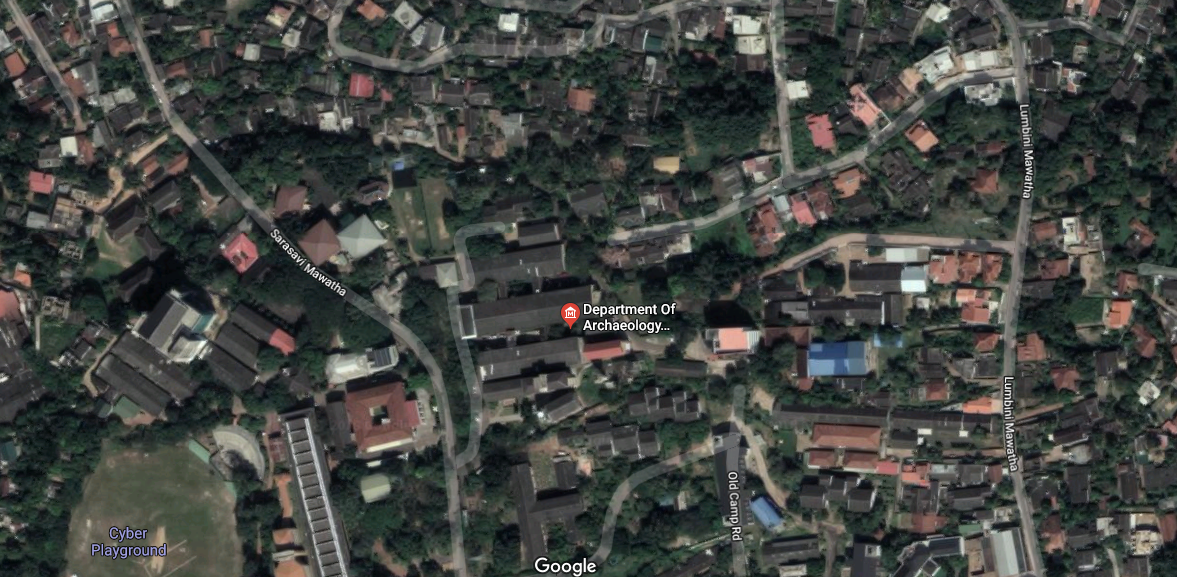
Department of Archaeology
Faculty of Social Sciences
University of Kelaniya.
Sri Lanka.

Tel : +94 (0) 112908779 / +94 (0) 112903891
Fax : +94 (0) 112908779

email:dep.of.archaeology@gmail.com

Location

©{2018} Department of Archaeology. All Rights Reserved.

Search